
SESSION
Critique of science: how to teach this skill
Science shouldn’t be sidelined by newsrooms. Yet many journalists and editors lack fundamental scientific knowledge or an understanding of how the scientific method works as a tool for testing “truth” and establishing social consensus. Journalism training often still doesn’t offer the skills needed for science reporting, which includes health, climate, environment, and technology, and their importance for society.
It is crucial to advocate for science journalism through dedicated training programmes. Some programmes in this vein already exist, though, and equip general news journalists with the necessary skills to accurately report on scientific topics, offering an understanding of how scientific inquiry works, and its flaws and limitations.
The session brings together speakers who are leading such programmes in different regions of the world—such as West Africa, South Africa, France, and the USA—to share their experiences and tools, and inspire others.
 Agnès VernetSession proposer and speaker | Freelance / AJSPI | France
Agnès Vernet has written for various French media, such as Sciences et Avenir, Medscape, 60 Millions de Consommateurs. She is the president of the European Federation of Science Journalism, has served on the board of the French Association of Science Journalists, and leads a partnership with Radio France that trains 900 journalists.
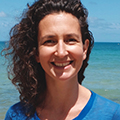 Magali ReinertSession producer and moderator | Freelance / AJSPI | France
Magali Reinert, a science journalist with 25 years of experience, specialises in climate change, ecology, and environment. She holds Master’s degrees in environment (Paris) and journalism (Johannesburg). Currently freelancing in France, she contributes to Nature, Reporterre, Médiapart, and others. She has been a board member of AJSPI since 2020.
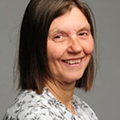 Lesley CowlingSpeaker | Wits Center for Journalism | South Africa
Lesley Cowling is an associate professor at the University of the Witwatersrand, South Africa, where she coordinates the Master’s and PhD programmes in journalism. Her research focuses on media’s role in public life, particularly long-form reporting, opinion, analysis, and debate. She was also the science editor for the Mail & Guardian.
 Siri CarpenterSpeaker | The Open Notebook
Siri Carpenter is an award-winning journalist, executive director of The Open Notebook, and editor of The Craft of Science Writing. She’s a past president of the National Association of Science Writers and has a doctorate in social psychology from Yale University. She lives in Madison, Wisconsin, USA.
 Kossi BalaoSpeaker | RJSAF (Réseau des Journalistes Scientifiques d’Afrique Francophone) | Togo
Kossi Elom Balao is president of the RJSAF and director of the Pamela Howard Forum for Global Crisis Reporting at ICFJ. Science journalist and trainer, he founded The Confidential Report newspaper and contributes to various media, including Scientific African Magazine. In 2021, he was honoured by the Online News Association.