
SESSION
Will Africa ride (or miss) the quantum wave?
In the past, Africa has largely missed the waves of progress and economic development brought about by revolutionary technologies such as the semiconductor and silicon chip. Another wave is currently sweeping the world—that of quantum technology.
Africa can’t afford to miss out—again—on the progress and economic development that comes with revolutionary technologies. But what are the continent’s quantum science capabilities and what does it need to ride this wave successfully? Do we, as science journalists and science communicators, have the skills to tell this story?
 Wiida BassonSession proposer and producer | Stellenbosch University | South Africa
Wiida Basson is an experienced science communicator and science journalism trainer, currently covering research-related news in the physical, mathematical and biological sciences for the Faculty of Science at Stellenbosch University in South Africa. She also practices as a part-time science journalist, writing primarily for Nature Africa.
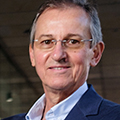 Francesco PetruccioneSpeaker | Stellenbosch University | South Africa
Francesco Petruccione is an expert on quantum systems and machine learning with quantum computers. He has published more than 340 papers in peer-reviewed scientific journals, and co-authored significant texts on the topic. These include the monographs on The Theory of Open Quantum Systems and Supervised Learning with Quantum Computers.
 Yaseera IsmailSpeaker | Stellenbosch University | South Africa
Yaseera Ismail specialises in the development of quantum technologies, particularly in the field of quantum information science. She is an experimentalist developing quantum optical tools for the advancement of free-space, long-range secure quantum communication.
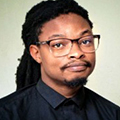 Sibusiso BiyelaSpeaker | Freelance | South Africa
Sibusiso Biyela is a South African freelance science journalist, digital science communicator, and podcaster. He is co-producer and co-host of the Ilukuluku podcast which discusses scientific topics in isiZulu. He has also contributed to the Masakhana Decolonise Science project which attempts to make science more accessible by translating it into African languages using artificial intelligence technology.