
SESSION
Misinformation: what are we missing?
“Fake News is everywhere,” we’re often told, which corrupts the public discourse. And yet this can mostly be addressed by pre-bunking, debunking, and fact checking. But how successful are these strategies really, and what are their limitations? Is the underlying assumption—an oversupply of misinformation—really the whole story here, or could other factors play a role, perhaps demanding different strategies?
In this session, we will challenge common assumptions about misinformation and discuss often-neglected aspects of the debate. We’ll work with the audience to develop evidence-based journalistic strategies to address the misinformation crisis, enriched with on-the-ground examples from journalists and researchers. We’ll also explore cultural differences using case studies from Kenya, Nigeria, South Africa, Germany, and the United States, and discuss the role of social media algorithms.
 Andreas von BubnoffSession proposer, producer and speaker | Ansbach University of Applied Sciences | Germany
Andreas von Bubnoff is a professor of journalism and science communication at Ansbach University of Applied Sciences in Germany, and directs the new English-language Ansbach science communication Master’s programme, which starts in late 2025. In addition, he continues working as a science journalist and multimedia producer for German and English-language media.
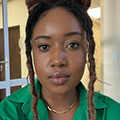 Tendai DubeSpeaker | AFP News Agency | South Africa
Tendai Dube joined Agence France-Presse in November 2018 as the first fact-checking journalist in its Johannesburg bureau. She brings a multifaceted background in journalism and media, with experience in international newsrooms including CNBC Africa and Reuters, covering key developments across Southern Africa.
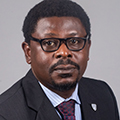 Nwachukwu EgbunikeSpeaker | Pan-Atlantic University | Nigeria
Nwachukwu Egbunike has a doctorate in media and communications, and has written five books on related topics. He is a senior lecturer at Pan-Atlantic University’s School of Media, and Communication and heads its University Press. The former Global Voices’ regional editor for Sub-Saharan Africa, he has been active in Africa’s digital rights space as an advocate, journalist, and digital media scholar since 2011.
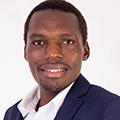 Enock NyarikiSpeaker | Poynter Institute | Kenya
Enock Nyariki is communications manager of the International Fact-Checking Network (IFCN) at the Poynter Institute in St. Petersburg, Florida, in the USA. He previously was news editor and managing editor of PesaCheck, where he helped launch fact-checking operations in nine African countries. He’s originally from Kenya.
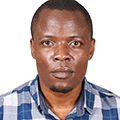 James Okong’oModerator| Harvard University | Kenya
James Okong’o is a digital investigation journalist with over eight years of experience. Most recently, he worked at Agence France-Presse in Africa, focusing on misinformation and disinformation. He is currently a Nieman Fellow at Harvard University.